
15 Side Hustles That Can Generate Extra Income
Side hustles can bring in extra money without taking over your main job, studies or caring responsibilities. The best ones fit the hours you actually have, use skills you already lean on, and don’t ask you to risk more upfront cash than you’re comfortable losing.
Key takeaways
- The right side hustle is one that suits your available time, current skills and initial budget.
- Cheaper ideas are simpler to trial, while services that require stronger skills tend to pay better hourly rates.
- Begin with a limited pilot, measure what happens and expand only when demand is obvious.
- Build tax, admin and pricing into the plan from the beginning so costly errors are less likely.
- Major success stories do occur, although most side hustles are better treated as reliable extra earnings than instant breakthroughs.
What side hustles are, and how to choose one that fits your life
A side hustle is an extra way to earn money around your main commitments, usually with some flexibility in the timetable. That might mean paid tasks, selling products, making content, or offering a service from home.
The real difference from freelancing comes down to control and scale. Freelancing usually means client work that you price, deliver and complete to a brief; a second job tends to mean fixed shifts and less room to move. A side hustle can look like either, but it can also be smaller, more experimental and faster to get off the ground.
The basic checks are fairly simple: how much money you need to start, how many hours you can spare each week, what skills you already have, and whether the idea could grow beyond a one-off payment. Work-from-home options are especially useful because they cut out commuting and fit more easily around unpredictable schedules. Coursera points out that working from home appeals because it can sit alongside paid employment without adding a full commute.
Keep your expectations realistic. CNBC Make It has covered some eye-catching examples, including a side hustle said to have grown to $3.8 million a year, a business started with $16,000 that now earns up to $90,000 a month, and a family game business that could reach $5 million in 2025. Those are real cases, but they are not normal starting points. The useful takeaway? Some ideas stay small and helpful, while a few grow much larger over time.
15 side hustles, grouped by time, skill and startup cost
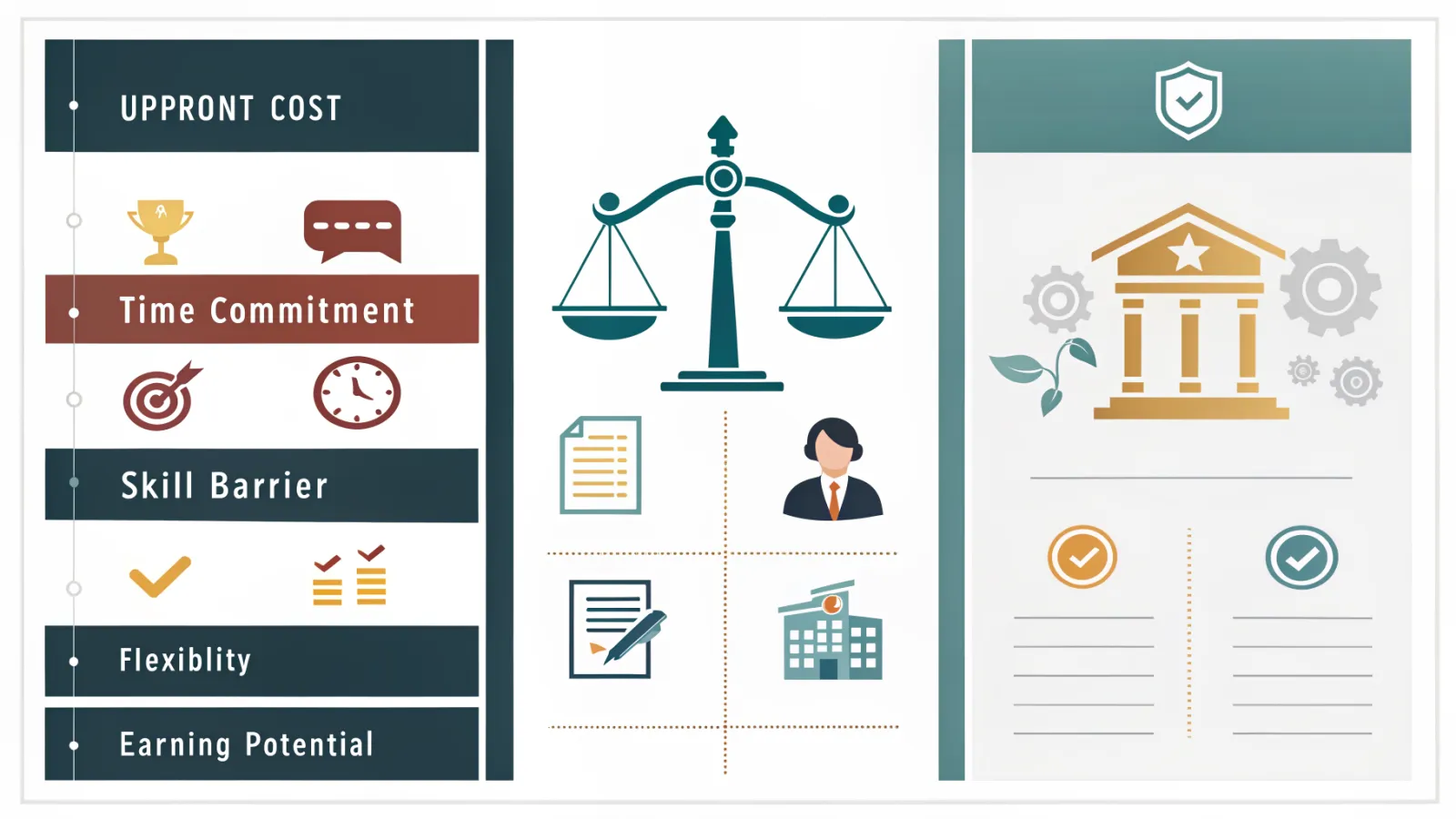
| Side business | Ideal for | Initial cost | Time required | Skill level | Flexibility | Potential earnings |
|---|---|---|---|---|---|---|
| Tutoring online | People confident with school subjects, languages or exam prep | Low | 2–8 hours a week | Medium | High | Moderate to high |
| Writing or editing as a freelancer | Skilled writers and quick editors | Low | Flexible and project-based | Medium to high | High | Moderate to high |
| Work as a virtual assistant | Organised people able to manage admin | Low | 5–15 hours a week | Medium | Strong | Mid-level |
| Survey platforms and market research | People looking for very light tasks | Minimal | Brief sessions | Limited | Strong | Limited |
| Print-on-demand | Creatives able to produce simple designs | Low to medium | Heavy upfront, with light maintenance later | Mid-range | Strong | Low to medium |
| Dog walking and pet sitting | Animal lovers who are available locally | Minimal | Evenings, weekends or the school run | Minimal | Mid-range | Fair |
| Courier work or delivery driving | Those with a vehicle and spare shifts | Fair | Based on shifts | Minimal | Mid-level | Fair |
| Reselling second-hand items | Those who can identify undervalued stock | Minimal | Adaptable | Low-to-mid | Significant | Fair |
| Event or listing photography | Those with a camera and a good eye | Fair | Based on projects | Mid-level | Moderate | Medium to high |
| Managing social media | Those who understand posting, scheduling and analytics | Low-level | Consistent yet flexible | Medium to high | High-level | Medium to high |
| Creating content on TikTok or YouTube | Those comfortable with editing or being on camera | Minimal | Ongoing, with a slow start | Medium to high | High-level | Uncertain early on, with high upside later |
| Captioning or transcription | Fast typists with strong attention to detail | Minimal | Per task | Moderate | Substantial | Minimal to moderate |
| Handcrafted goods | Craft workers and makers | Minimal to moderate | Manufacturing plus selling time | Moderate | Moderate | Mid-level |
| Bookkeeping assistance | People with strong numeracy and attention to detail | Minimal | Based on clients | Substantial | Moderate | Mid-level to substantial |
| Providing local services such as furniture assembly or flat-pack assistance | Hands-on people who have tools and transport | Low to moderate | Evening or weekend slots | Low to medium | Medium | Moderate |
For low-cost side income, survey work, reselling and pet sitting are usually the easiest options to test. If you already have a professional skill, tutoring, bookkeeping, writing or social media management will usually give you a higher earning ceiling. If you want something that could turn into a larger online business, creating content on TikTok or YouTube can take longer to gain traction, but it can scale well once you understand your audience.
Business Insider has shown how unpredictable these ideas can be once you actually try them. Tom Blake, who has tested more than 100 side hustles, says many do not perform as advertised and that he started doing them because he needed help paying bills. It is a useful reminder: treat each idea as a test, not a promise. Business Insider
How to start with the least risk
- Pick one side hustle that suits the hours you genuinely have available, rather than the hours you wish were free.
- Keep the first test small: one service, one listing, one product or one brief content series is plenty.
- Decide on a budget before spending anything, and keep side hustle income separate from household money.
- Find customers through more than one route, such as a marketplace, social media and a specialist platform.
- After a set period, look at the results and choose whether to stop, adjust the offer or scale up.
That keeps the learning cheap. With tutoring, for instance, start with one subject and one rate, then adjust once you can see whether enquiries are turning into paid sessions.
The same idea applies to content-led income. Posting a few videos on TikTok or YouTube will teach you far more than weeks of planning, and it costs little beyond your time and the discipline to keep going.
What can go wrong with side hustles, and how to avoid it
- Be wary of unrealistic income claims and viral success stories that make fast cash seem easier than it really is.
- Set clear weekly hours before starting, so the work does not slowly swallow your evenings and weekends.
- Think about admin and tax from day one, instead of treating the money as casual spending cash.
- Be prepared for demand to go up and down, particularly with freelance work, resale and delivery work.
- Test whether tips from Reddit, creators or people you know genuinely match your abilities and the market you are in.
- Set basic limits, including a stop-loss budget, straightforward pricing and a clear point where you decide to quit.
A common mistake is paying for too many tools before the idea has proved it can work. Another is pricing too low, then burning yourself out because each job takes longer than you expected.
A clear structure is your best protection. If a side hustle is difficult to explain in one sentence, costs a lot to test, or depends on a lucky break, it is probably not the best place to start.
How to choose the right side hustle for your situation
Your best option depends more on your routine than on the idea by itself. Someone in a full-time office job may suit evening-only work such as tutoring or editing, while someone on irregular shifts may prefer pet sitting, delivery work or reselling because those are easier to switch on and off.
If you need money quickly, choose a service you can offer and sell this week. If you can wait for a bigger possible return, content creation or a product-based idea may suit you better, but the longer runway matters: some businesses grow large, while others remain modest earners for a long time.
A simple shortlist by profile
- Beginner: surveys, pet sitting, reselling and basic delivery work.
- Skilled worker: tutoring, bookkeeping, writing, editing and social media management.
- Home-based worker: virtual assistant tasks, transcription, print-on-demand and handmade products.
- Creator: TikTok, YouTube and niche content based on a topic you already understand well.
The practical check is simple. Ask yourself three questions: how much time do I have, what can I already do well, and how soon do I need the money?
If your answers point to low risk, start there and ignore the louder stories about overnight success. If they point to a skill you already have, sell that first. If they point towards content or products, test small and review the results before you expand.
For many readers, the smartest move is not searching for the perfect side hustle. It is choosing one that fits this month, checking whether it works, and then deciding whether to keep it small or build it into something bigger.
Frequently asked questions
What are the easiest side hustles to start?
The simplest side hustles usually need little money upfront and use abilities you already have, which makes them easier to test quickly. Survey work, reselling and pet sitting are among the easiest options to try, and if you already have a professional skill, tutoring, bookkeeping, writing or social media management can be straightforward places to start.
How much can side hustles earn?
Income varies a lot. Some side hustles only add a small amount each month, while others can build into something much larger over time. The CNBC examples in the article show what can be possible, but they’re standout cases, not typical results. It’s safer to treat any idea as a test, not a guarantee.
Can I run side hustles from home?
Yes. Home-based side hustles are popular because they cut out commuting and are easier to fit around paid work or study. Coursera points to online services, content creation and digital freelancing as strong options for working from home.
What is the lowest-risk way to test a side hustle?
Start small and keep the first version simple. One service, one listing, one product or one short run of content is enough. Set a budget before you spend, choose a fixed review period, and only expand if there’s clear demand. That way, the trial stays cheap and it’s easier to walk away if it doesn’t work.
Are online side hustles better than offline ones?
Neither option is automatically better. Online side hustles can scale faster and reach more people, while offline work may bring quicker local demand and less competition. The better choice comes down to your available time, the skills you can use, and how much risk you’re willing to take at the start.