
Best Mobile Banking Apps and Their Features
Best mobile banking apps make everyday money admin quicker: checking balances, paying bills, moving money and freezing a card if something looks off. In practice, the better apps keep those jobs within a couple of taps, instead of hiding them behind cluttered menus or vague labels.
Key takeaways
- A strong banking app makes routine money tasks fast and easy to understand.
- Security options such as biometric sign-in and alerts ought to be treated as essential.
- Budgeting features only help when they reveal genuine spending behaviour.
- A clean, simple design often counts for more than a lengthy list of tools.
- Pick the app that fits the way you manage money, rather than the one with the loudest marketing.
What Mobile Banking Apps do well, and what they do not
A good mobile banking app should handle the basics cleanly: balance checks, transfers, bill payments, mobile cheque deposits, card controls and alerts. Bank of America’s app shows how broad that core package can be, with checking, savings, credit card, loan and investment accounts in one place, plus Zelle® payments and cheque deposit through the phone camera Bank of America.
That is a sensible benchmark. If an app shows money movements clearly, lets you act quickly and keeps the main tools easy to find, it is doing its job. Extra features are fine, but they shouldn’t shove the essentials out of view.
Banking apps can look similar in app store descriptions, then feel very different once you use them. U.S. Bank’s mobile app, for example, highlights spending tracking, goal saving and management across all accounts, including linked accounts at other banks. That makes it useful for anyone who wants one view of their finances, rather than just another way to pay U.S. Bank.
For a UK audience in South Africa, the point is not to copy those US examples exactly. Use them as a checklist instead. Can your bank’s app show your accounts, move money, deposit cheques where offered, and track spending from one place? Yahoo Finance’s 2026 comparison also points to everyday usefulness as a key test, rather than brand size alone Yahoo Finance.
The features worth comparing first
| Feature category | What you should check | Why this is important | Essential or simply convenient? |
|---|---|---|---|
| Day-to-day banking | Checking balances, making transfers, paying bills, depositing funds, managing cards | These are the main jobs most users handle each week | Handy |
| Making payments | Peer-to-peer payments, quick transfers, payee administration | Cuts time and lessens the need to visit a branch | Handy |
| Paying in deposits | Mobile cheque deposit with clear image-capture guidance | Useful if paper cheques still come your way | Handy |
| Connected accounts | See and transfer money between accounts, including with other banks | Provides a broader view of your cash flow | Helpful for people using several banks |
| Savings features | Targets, round-ups or spending nudges | May encourage better habits with little added effort | Good to have |
| Protection | Biometric login, notifications, secure messages | Safeguards account access and helps flag unusual activity fast | Helpful |
| Analysis | Spending categories, patterns and summaries | Helps show more clearly where money is being spent | Helpful |
| Additional features | Rewards dashboards, budgeting themes, product offers | Can be handy, but should not get in the way of everyday tasks | Good to have |
The real gap between a decent app and a genuinely useful one is often how quickly you can reach the main features. A polished rewards area is nice, but it won’t help much if checking a transfer or approving a payment takes three extra screens.
Security, login and fraud controls
Fast login matters, as long as it doesn’t weaken security. Biometric sign-in, such as Face ID or Touch ID, gets you into the app without typing a password every time, and Bank With United specifically lists Touch ID and Face ID as secure access options in its mobile app Bank With United.
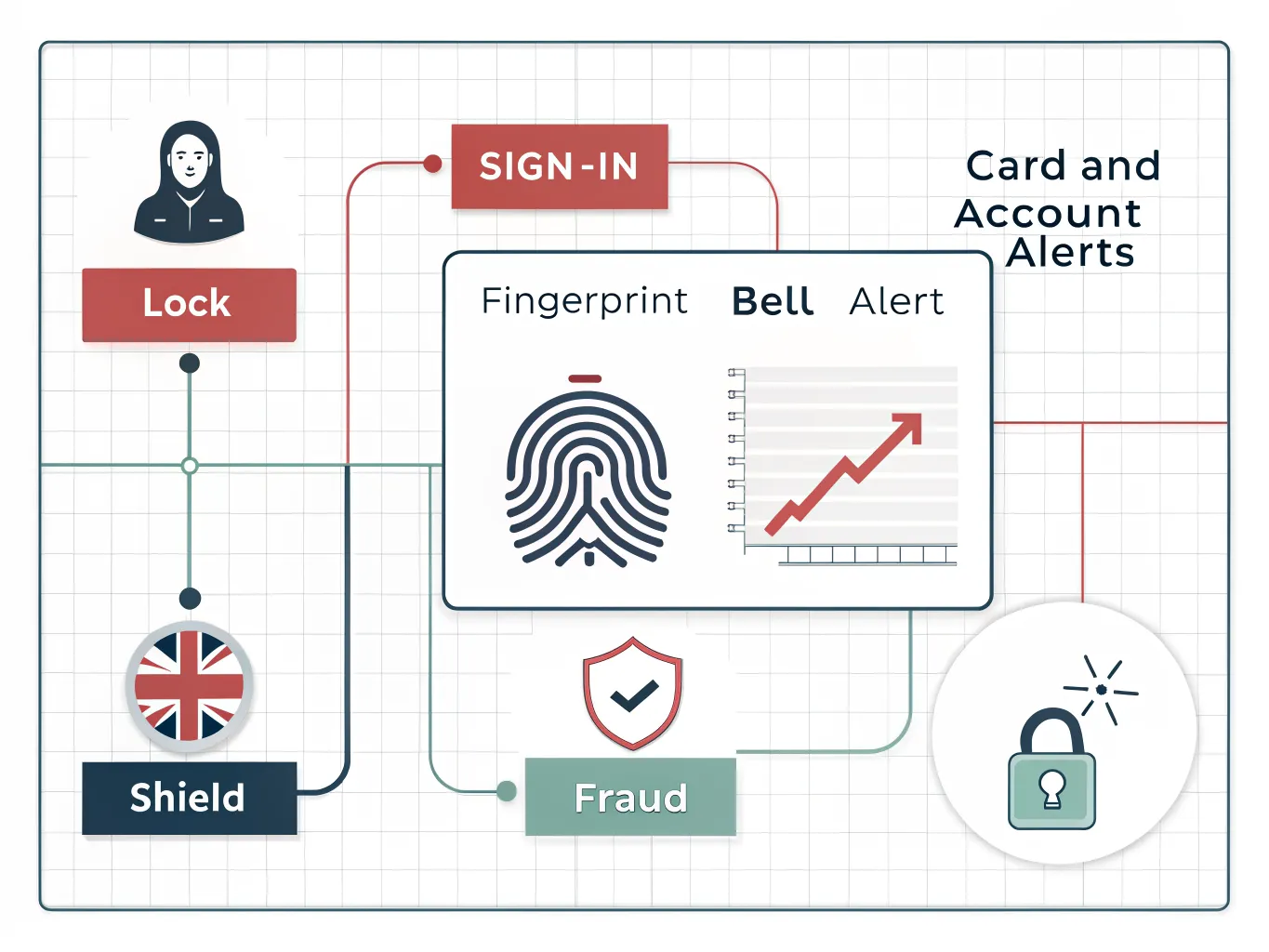
Alerts matter just as much. A strong app should flag card activity, transfers and account changes quickly, so unusual activity is easier to spot before it becomes a bigger problem. In-app messaging is useful too, because it keeps sensitive questions inside the banking app rather than pushing them through standard email.
For transfers, look for protections around new payees, limits and confirmation steps. That becomes especially important when an app connects to fast payment services such as Zelle®, because speed only helps if the bank also gives you enough checks to reduce the risk of paying the wrong person Google Play.
Where you download the app from matters too. Updating it through a trusted store such as Google Play reduces the chance of using an outdated version with known security flaws, and it gives you a chance to check the publisher before you install or update anything.
Budgeting and spending tools that help people manage money
- Spending insights can break down where your money is going by category, helping you recognise habits in groceries, transport or subscriptions without needing to export statements.
- Account linking lets you view balances from more than one bank in a single place; U.S. Bank emphasises this across accounts, including external ones, which is useful for people who keep money split between current and savings accounts.
- Goal tracking can make broad saving intentions visible, helping you keep travel savings, emergency funds or tax money apart from day-to-day spending.
- Transaction categorisation is useful when the app names purchases clearly, as small repeat charges become easier to spot and check.
- Cash-flow views can give you an early warning if bills and card payments may leave the account short before payday.
- These features matter most when they help prevent overdrafts, reduce manual checking and make spending patterns clear at a quick glance.
For budgeting, the better apps don’t swamp you with charts. They show the key figures immediately, then let you dig into the detail if something looks off. That helps explain why Forbes Advisor’s 2026 comparison places U.S. Bank Mobile Banking near the top for budgeting and spending insights Forbes Advisor.
How to choose the right app for your needs
- Choose an app based on your main need. If convenience is the priority, look for quick balance checks, transfers and mobile deposits. If you want tighter control, pay closer attention to alerts, budgeting features and card management.
- Make sure it works with the accounts and devices you already have. A bank app should support the accounts you use, whether that covers current accounts, savings, loans or linked investment products such as Merrill accounts.
- Check the app store listing and the bank’s support pages before making a switch. That is where you can confirm whether features such as Zelle®, cheque deposit or biometric login are really available on your device.
- Treat ratings carefully. Reviews may point out crashes, login issues and awkward navigation, but one-star complaints carry less weight than repeated remarks about the same problem.
- Try the essentials once the app is installed. Sign in, switch between accounts, create an alert and see whether the layout is clear without having to search through menus.
- Pick the app that feels reliable on a normal day, rather than simply the one with the longest list of features. A good banking app should save time, limit errors and make your money easier to keep track of.
If you’re judging apps from a South Africa-based perspective, start with how you already bank. A simple app with clear navigation may be the better fit if you only need balance checks and payments. If you manage several accounts, choose the one that gives you one clean view without making you wait.
Frequently asked questions
What features should a good mobile banking app have?
As a baseline, an app should handle balance checks, transfers, bill payments and alerts, with secure sign-in built in. Stronger apps make mobile cheque deposits, card controls and account management easy to find, rather than tucking them away in extra menus. Account linking and spending insights can help, but treat them as extras, not substitutes for the core banking tasks.
Are mobile banking apps safe to use?
Yes, as long as the bank has strong safeguards in place, including biometrics, secure authentication and fast alerts, and you download the app from a trusted source. Security is better again when card controls, fraud notifications and secure in-app messaging are available, because sensitive actions stay inside the banking environment. Updating the app through official stores also reduces risk.
What is mobile cheque deposit?
With mobile cheque deposit, you take a photo of a cheque in the app and pay it into your account without visiting a branch. It’s only available where the bank supports the feature, and you’ll still be bound by that bank’s limits and eligibility rules, so treat it as a useful extra rather than something every app will include.
Can mobile banking apps help with budgeting?
Yes. Some apps offer spending insights, transaction categories, savings goals and account linking, which can help you see where your money goes and spot regular costs. The best tools put the important numbers in front of you quickly, so you can review cash flow, track savings goals and catch problems before they affect your balance.
Should I compare the app store listing as well as the bank website?
For a proper comparison, check the bank’s website and the app store listing. The website should show the official feature list, while the store listing can reveal compatibility, update history and recent user feedback. Looking at both gives you a clearer sense of whether the app is current, supported and likely to work well on your device.