
Petrol vs diesel cars in South Africa: which is cheaper to live with
For most South African drivers, petrol is cheaper to live with if you mainly do short urban trips and rack up modest annual mileage. Diesel usually starts to make sense once you’re covering long distances, piling on high mileage and keeping the car long enough for fuel savings to offset the higher purchase price and the risk of pricier repairs.
Key takeaways
- Petrol is usually the better choice for short urban trips and lower annual mileage, while diesel tends to pay off only after several years of high-mileage use.
- Compare the extra purchase price against yearly fuel savings, because the break-even point decides whether diesel really costs less.
- Check the latest official fuel-price release before you compare cars, since a stale price can change the result by the next month.
- Diesel-specific repairs, such as injectors and particulate filters, can wipe out fuel savings if the car is kept long enough for age-related faults to appear.
This guide is about standard passenger cars, not bakkies, vans, performance cars or heavy-duty commercial vehicles. The real answer isn’t just what happens at the pump, because servicing, maintenance, resale value and licence costs all sit in the same ownership bill.
The real answer: petrol or diesel, and when each is cheaper
Diesel often wins for high-mileage drivers, while petrol is usually easier to live with for lower-mileage, stop-start urban use. The deciding factors are annual mileage, the kind of roads you drive, and the upfront price gap between similar models.
Fuel price alone does not decide the winner. A car that sips less fuel can still cost more overall if it’s dearer to buy, dearer to service, or more expensive to repair once parts such as injectors or after-treatment systems start ageing.
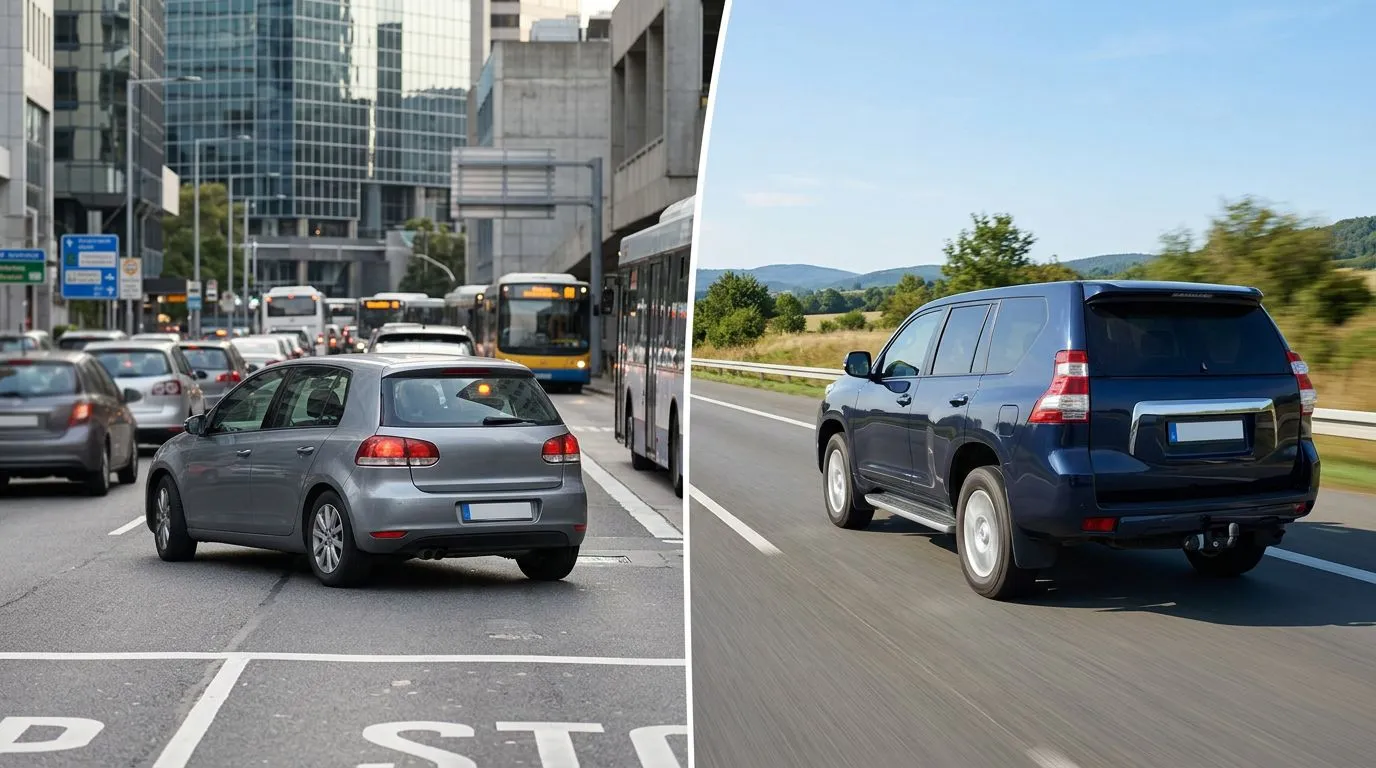
In practice, the cheaper choice is the one that matches your driving pattern. If your week is mostly short trips, school runs and traffic, petrol usually makes more sense. If you spend long hours on the N1, N3 or N2 and cover serious distance every month, diesel has a better chance of paying back.
How fuel price differences turn into per-mile running cost
- Check the current inland fuel price on the Department of Mineral Resources and Energy monthly fuel-price release, or the latest update published through official South African channels. Do not rely on last month’s number, because the gap changes.
- Take the car’s fuel consumption figure and convert it into litres per 100 km, or use the figure the car already shows. Then multiply litres used by the pump price to get cost per 100 km.
- For a simple comparison, divide the cost per 100 km by 100 to get cost per kilometre. That makes it easier to compare two cars that are close on purchase price but not on consumption.
- Work out a monthly figure by multiplying cost per kilometre by the distance you actually drive. This is the number that matters for your budget, not the brochure claim.
- Test the break-even point by comparing the extra amount you would pay to buy the diesel model with the yearly fuel saving it offers. When the saving is smaller than the price premium, petrol is still the better money choice.
A useful way to think about this is simple: if a petrol car uses more fuel but costs much less to buy, the lower sticker price can outweigh the fuel bill for years. If a diesel car costs more upfront but uses noticeably less fuel on long trips, the fuel saving can catch up. The distance you drive each year decides which side of that line you sit on.
The AA South Africa regularly publishes fuel-price context for motorists, while the official fuel-price release remains the place to check the latest figures before you compare cars. The practical consequence is straightforward: a comparison done with stale prices can point you to the wrong engine.
What taxes, levies and rules change the cost equation
South African pump prices include more than crude oil and transport costs, and that matters because tax and levy changes can move petrol and diesel in different ways. The main components that shape what you pay include the general fuel levy, the Road Accident Fund levy, slate-related adjustments and the basic fuel price structure used by government.
Those charges affect the amount you pay at the filling station, but they do not on their own decide whether petrol or diesel is cheaper to own. A diesel car can still cost less overall on fuel while remaining a worse buy if the purchase price, servicing pattern and repair risk are not in your favour.
For the latest official numbers, check the Department of Mineral and Petroleum Resources fuel-price announcements and the current guidance around South African fuel pricing. SARS is relevant to the tax environment more broadly, but the practical number a driver needs is the current pump price, not the tax theory behind it.
The key point is timing. A fuel gap that looks attractive today can narrow or reverse within weeks, so a purchase decision should be based on the way the car will be used over several years, not on one month’s price chart.
Servicing, maintenance and ownership costs beyond fuel
- Diesel servicing often involves more expensive filters and, on some models, stricter attention to oil specification and service intervals. Manufacturer service schedules are the only safe guide for the exact interval and oil grade.
- Diesel-specific parts can be costly when they fail. Injectors, turbochargers, fuel filters and particulate filters, where fitted, can turn a small saving at the pump into a much larger workshop bill.
- Petrol engines are usually simpler to live with for short-trip use, especially where the car is started and stopped often. That can reduce the risk of some diesel-specific issues that show up when engines do not warm through properly.
- Tyres, brakes, insurance and vehicle licence fees are separate from fuel choice. A higher-spec diesel model can erase part of its fuel advantage simply because it sits in a pricier trim or attracts a different insurance premium.
- Insurance brokers in South Africa often price the whole vehicle profile, not just the engine type. If the diesel version is valued higher on the used market, the premium can follow that value.
The practical consequence is that the cheaper fuel bill is only one line in the monthly budget. A diesel that saves a little every time you fill up can still cost more over a year if it needs more expensive servicing or lands you with a repair that petrol ownership would have avoided.
Second-hand buying points to inspect before you choose
- Check the full service history and look for mileage that makes sense for the car’s age. A diesel that has spent years doing short urban runs is a very different proposition from one that has lived on the highway.
- Ask whether the car was mostly used in town or on long trips. That usage pattern tells you more about likely wear than a glossy advert does, because diesel engines prefer sustained running and petrol engines tolerate short hops better.
- Look for smoke, rough cold starts and uneven idling on diesel cars. These are warning signs that maintenance has been neglected or that expensive components may be tiring.
- Inspect the oil condition and look for evidence of soot build-up, blocked filters or prior warning lights. If a diesel has a particulate filter, find out whether it has been maintained correctly and whether any faults have already been repaired.
- Confirm actual fuel use from the owner’s records, the dealer’s paperwork or a careful test drive. Used-car listings from AutoTrader South Africa can help you compare asking prices, but they do not replace a proper inspection.
A clean service record matters more on a diesel than many buyers expect. The mistake is to chase the lower running cost and ignore the car’s history, because an old diesel with weak maintenance can become the most expensive car on the shortlist very quickly.
Which type suits commuting, long-distance driving and towing better
| Use case | Petrol advantage | Diesel advantage | Best fit | Why it matters financially |
|---|---|---|---|---|
| City commuting | Usually cheaper to buy and often simpler to service | Can lose its fuel advantage in short, stop-start trips | Petrol for low annual mileage and mainly urban driving | Short journeys can stop a diesel from reaching its efficiency sweet spot |
| Long-distance motorway use | Usually quieter and often lower upfront cost | Often more economical at steady speeds and higher mileage | Diesel for frequent highway runs and high annual mileage | Fuel savings have more time to offset the higher purchase price |
| Towing and heavy loads | Can be strong and smooth, depending on engine size | Often better low-end torque for towing | Diesel if the car is designed for it and the owner covers serious miles | Load and gradient performance can change fuel use sharply |
The table points to one simple rule: the more your driving looks like steady-distance motoring, the more attractive diesel becomes. The more your driving looks like short, interrupted urban use, the more petrol tends to win on total cost and day-to-day hassle.
What to check before you decide
The cheaper car to live with is the one that matches your mileage, route and ownership horizon. If you drive mainly in town, don’t pay a diesel premium just to save on a fuel bill you will never run up. If you cover long distances every month, don’t dismiss diesel simply because the workshop stories are louder than the maths.
Use the current official fuel price, the manufacturer service schedule and a proper used-car inspection before you buy. Then compare the purchase price, the monthly fuel spend and the likely repair risk as one number, not three separate arguments. That is the only comparison that tells you which engine really costs less to live with.
Frequently asked questions
Does diesel always cost less to run than petrol in South Africa?
No. Diesel usually wins for high-mileage drivers on steady motorway runs, but petrol is often cheaper overall for short urban trips because the lower purchase price and simpler servicing can outweigh fuel savings. The article’s main rule is that the cheaper option depends on how many kilometres you cover each year and how long you keep the car.
How do I work out the break-even mileage for a diesel car?
Compare the extra amount you pay for the diesel model with the fuel saving it gives you per year, then divide the price gap by that annual saving. The article also says to use the current inland fuel price, not an old figure, because the answer changes as pump prices move.
Are diesel cars more expensive to insure in South Africa?
Not automatically. Insurance usually follows the vehicle’s value, repair costs, theft risk and your driver profile more than the engine type itself, so a diesel can be dearer only if the exact model sits higher in the market or is costlier to repair. Get quotes for the specific car rather than assuming diesel always costs more.
Should I avoid diesel if I only do short trips?
Usually yes. Short, stop-start journeys can stop a diesel from reaching the point where its fuel economy really pays off, and they can add wear because the engine does not warm through properly. If most of your driving is school runs, errands and traffic, petrol is generally the safer choice.
What should I check on a used diesel before buying?
Look beyond the service book and check for a history that matches the car’s mileage and age. Smoke on start-up, rough idle, warning lights, blocked-filter symptoms and signs of prior diesel-system repairs matter more on a diesel, especially if it has a particulate filter. A highway-used car with clean records is usually a better bet than a town-only diesel with patchy maintenance.